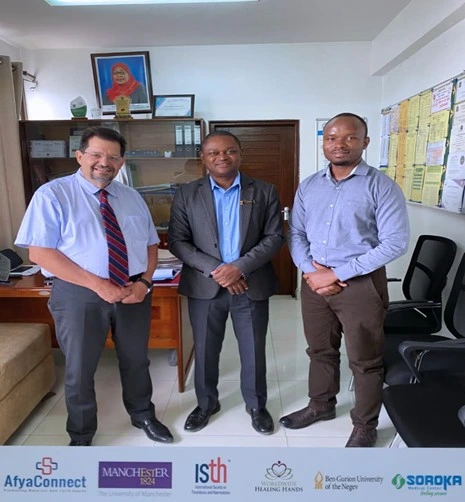
AfyaConnect conducts regular capacity-building workshops for midwives in collaboration with the Tanzania Midwives Association (TAMA) and international trainers from the University of Colorado Global Health unit on Helping Mothers Survive and Helping Babies Breathe. These workshops provide hands-on simulation and practical training in critical areas of maternal and newborn care, including management of postpartum hemorrhage, pre-eclampsia/eclampsia, and essential newborn resuscitation.
Simulation-based training like Helping Babies Breathe has been shown to significantly improve midwives’ skills, knowledge retention, and confidence in managing birth asphyxia and other delivery complications, leading to reductions in early neonatal deaths and fresh stillbirths when implemented effectively.
Investing in midwifery competency is especially vital in Tanzania, where skilled care during childbirth remains a key determinant of maternal and newborn survival and where access to quality emergency obstetric services can be limited. By strengthening clinical skills through evidence-based training Investing in midwifery competency
is especially vital in Tanzania, where skilled care during childbirth remains a
key determinant of maternal and newborn survival and where access to quality
emergency obstetric services can be limited.
By strengthening clinical skills
through evidence-based training, AfyaConnect and its partners aim to improve
frontline care, reduce preventable deaths, and support midwives to deliver
high-quality services with confidence.
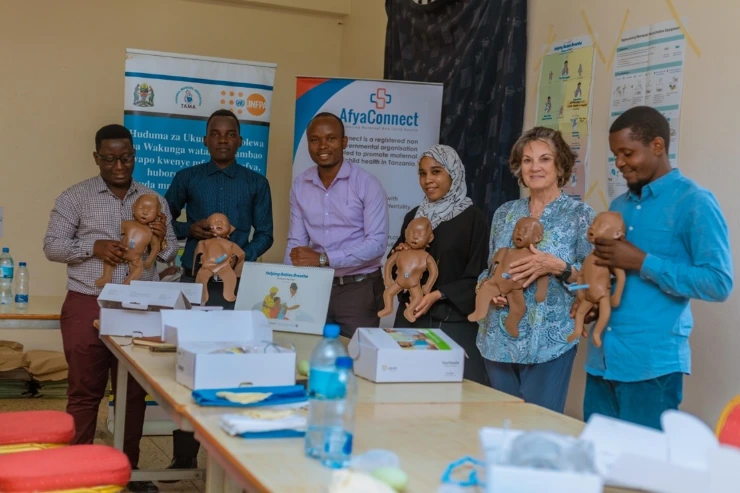
Training on Helping Babies Breathe (HBB) was successfully completed through a collaborative partnership with the Tanzania Midwives Association (TAMA), bringing together a multidisciplinary team of trainers. The training was facilitated by experienced local trainers from Muhimbili National Hospital and the Tanzania Midwives Association, alongside international trainers from the University of Colorado Global Health, fostering a strong exchange of practical expertise and global best practices in newborn care and resuscitation.
The training engaged 24 healthcare workers from Kisarawe District Hospital and surrounding health centres, with a focus on strengthening essential newborn care skills at facility and community levels.The primary objective of the training was to enhance participants’ capacity to provide timely and effective care for newborns, with particular emphasis on newborn assessment and neonatal resuscitation, contributing to improved neonatal outcomes.